Mobile LED screen trailers: 8 ways businesses and events use them
4 min read
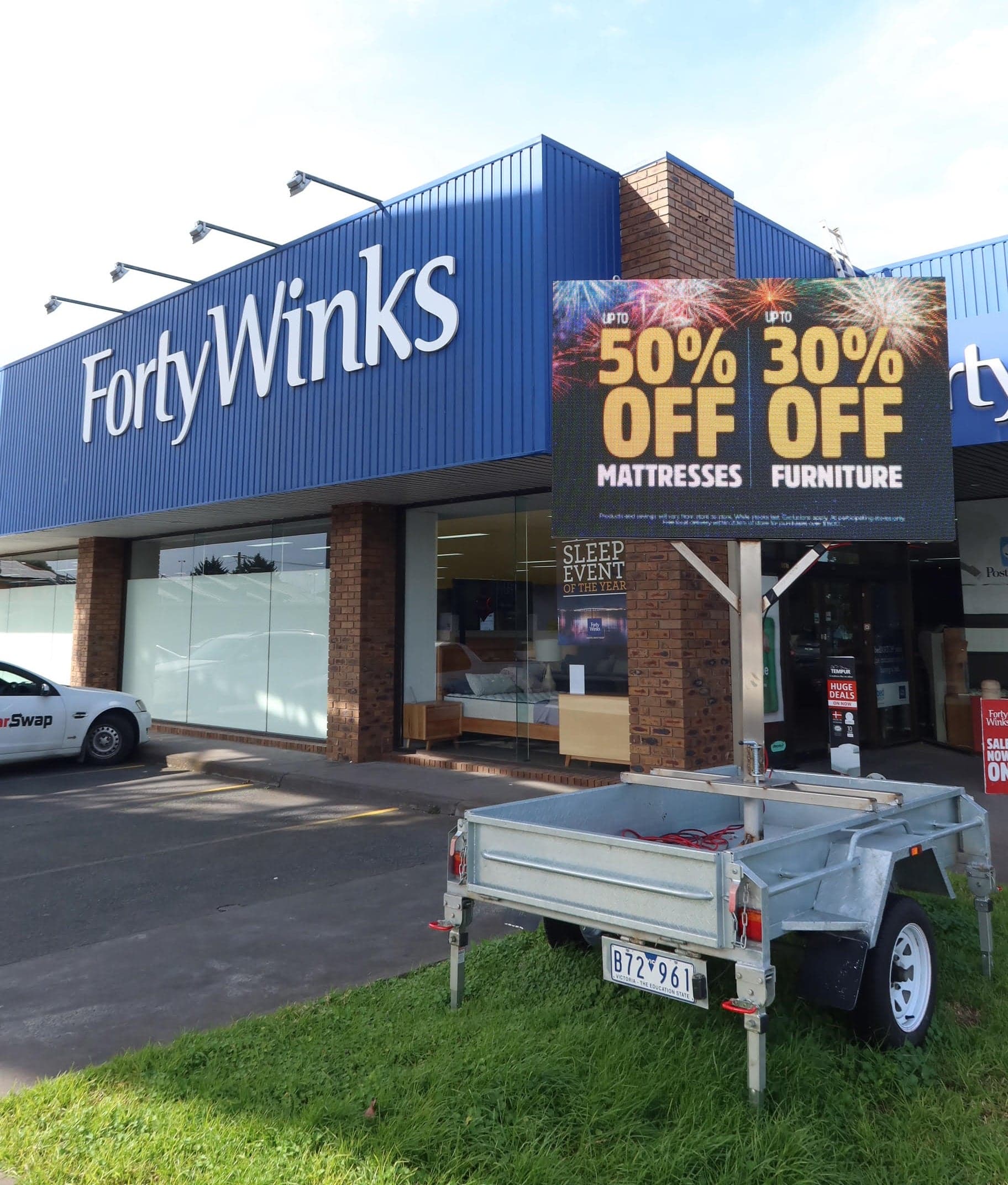
A fixed sign stays where it's built. A trailer screen goes where your customers are this week. Tow it in, park it, plug it in, and your message is up. Here are eight ways people use them.
1. Retail sales and clearance events
Park a screen at the front of the store for the length of a sale. A bright, changing message catches drivers and people walking past in a way a banner can't, and you can update prices and offers from one day to the next.
2. Car yards and dealerships
Car yards use trailer screens to show stock, prices and finance offers to passing traffic. A screen at the front boundary works like a roadside billboard on your own land.
3. Grand openings and launches
New store, new showroom, new product. A screen out the front for the opening weeks tells the whole street something is happening, then moves on when you're done.
4. Property developments and display homes
Developers use trailer screens at land releases, display villages and open days to show floor plans, prices and directions. When one stage sells out, the screen moves to the next.
5. Events and festivals
At markets, festivals, school fairs and community days, a screen can show the program, sponsor messages, maps and last-minute changes. A big screen can also show the main stage or the field to people at the back of the crowd.
6. Community and club sport
Clubs use screens for sponsor messages, match-day information and fundraising. For permanent scoring, our partner Sportal makes dedicated LED scoreboards.
7. Work sites
On construction, mining and industrial sites, a screen at the gate can show safety messages, site rules, induction information and daily notices. If a sign will control traffic on a public road, it needs to be a compliant traffic VMS instead. Our VMS guide explains the difference.
8. Testing a spot before buying a fixed sign
Not sure a permanent sign will pay off? Park a trailer screen in the spot for a few weeks or months first. You'll see how visible the spot is and how customers respond before you spend on a fixed sign and the approvals that come with it.
Placement tips
- Flat ground. The trailer needs to sit on firm, nearly flat ground.
- Power nearby. Our trailers run on mains power. If your site has no power at all, we can connect you with one of our solar LED trailer partners.
- Your own land. In most cases a trailer on your own land doesn't need council approval, but the council nature strip or footpath is a different story. Check with your council if you're unsure.
- Angle it to the traffic. Turn the screen towards the direction most people come from, rather than square to the road.
- Keep it clear. Don't block driver sight lines, footpaths or driveways.
Content tips
People passing a trailer screen have a few seconds to read it. Keep each slide to one idea, use big bold text, and put your offer and your name front and centre. Our content tips go into more detail.
Common questions
Do I need council approval to park an LED trailer at my business?
In most cases, not if it's on your own land. The council nature strip and footpath are a different matter, so check with your council if you're unsure.
Can an LED screen trailer show video?
Yes, the screen can play video. Near roads, though, the rules often ban moving content on signs that drivers can see, so stick to still images there.
How far away can people read a trailer screen?
It depends on the screen size, the pixel pitch and the content. Bigger screens with bold text read from further away. Our pixel pitch guide explains the rule of thumb.
Sizes and options
Our trailer screens come in several sizes, from compact trailers to large screens for big events, and there's an LED ute too. Compare them in trailers and utes, or rent one on a plan from 10 days to 12 months in rental screens.