How bright should an outdoor LED sign be? Nits, sunlight and night dimming
4 min read
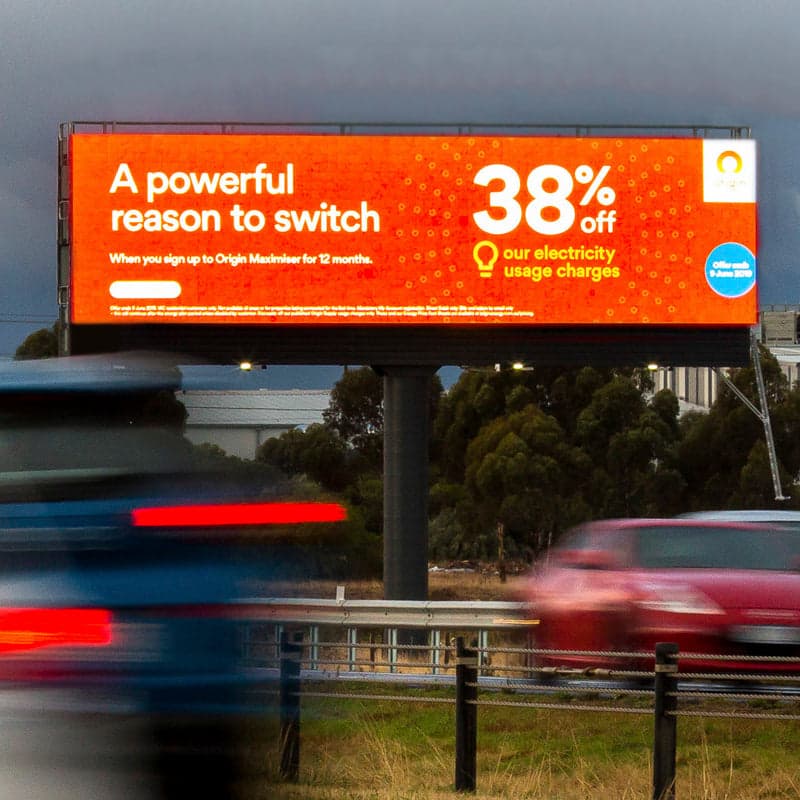
Brightness is the spec that separates an outdoor LED sign from an indoor one. Too dim and your sign disappears at midday. Too bright and it glares at drivers and neighbours at night, which can breach your approval. Here's how to get it right.
What a nit is
Screen brightness is measured in nits. One nit is one candela per square metre (cd/m²), so you'll see both units on spec sheets and in council guidelines. They mean the same thing.
For a sense of scale, a typical laptop screen runs at a few hundred nits.
How bright is bright enough?
| Where the screen is | Typical LED brightness |
|---|---|
| Indoors, away from windows | roughly 500 to 1,500 nits |
| Behind a shop window | brighter than a standard indoor screen, depending on the sun |
| Outdoors | 5,000 nits or more |
Indoors, more isn't better. A screen that's too bright in a foyer or showroom is tiring to look at, and it uses more power than it needs to.
Behind glass, sunlight is the problem. Glass reflects, and direct sun on the screen face washes out the picture. A window that gets afternoon sun may need a semi-outdoor panel, such as our P2.9 semi-outdoor LED, rather than a standard indoor one.
Outdoors, the hardest case is sun shining straight onto the face of the sign. East-facing signs cop it in the morning and west-facing signs in the afternoon. Outdoor LED is built with enough headroom to stay readable through both.
Why signs must dim at night
A sign that's easy to read at noon is painfully bright at midnight. The gap between daylight and a dark street is huge, and a sign that doesn't dim can dazzle drivers and light up bedrooms across the road.
That's why councils and road authorities set night limits. As one example, the NSW Transport Corridor Outdoor Advertising and Signage Guidelines allow digital advertising up to 6,000 cd/m² in daytime in most zones, with no limit while full sun is on the sign face, but cap night-time brightness at 350 cd/m² in most zones and 200 cd/m² in the most sensitive zone. That's a drop of more than 90 percent from day to night. Your own council's limits may differ, so check them. Our council approval guide has more.
How automatic dimming works
Most outdoor LED signs can dim themselves in one of two ways:
- A light sensor measures the ambient light and adjusts the screen as conditions change. It copes with clouds, storms, dawn and dusk.
- A schedule sets brightness by time of day. It's simple, but it can't react to a dark, stormy afternoon.
The best setups use a sensor, with a schedule as a backstop. Set it up at installation, then check the sign at night from where drivers and neighbours actually see it.
Brightness, power and lifespan
Brightness costs power. An LED screen draws the most at full brightness showing white, and much less at lower brightness or with darker content. Dimming at night saves money, and a screen that runs cooler lasts longer. See how long LED screens last.
Content plays a part too. Light text on a dark background reads well from a distance, and a mostly dark screen draws less power than a mostly white one. Our content tips go further.
Contrast counts as much as brightness
The dark parts of a screen reflect sunlight as well, which washes out contrast. Good outdoor modules use dark faces and small shades around the LEDs to keep blacks dark in daylight. Two screens with the same nits rating can look very different in the sun because of this.
Common questions
How many nits does an outdoor LED sign need?
Outdoor LED typically runs at 5,000 nits or more, so it stays readable in full sun.
Why does my LED sign look washed out in the sun?
Either the screen isn't bright enough for direct sun, or sunlight reflecting off the screen face is cutting the contrast. Screens built for outdoor use handle both far better than indoor ones.
Will an LED sign bother my neighbours?
Not if it dims properly at night and, where possible, faces away from homes. Night brightness limits exist for exactly this reason.
Questions to ask a supplier
- What's the maximum brightness, in nits?
- Does it dim automatically, and is that sensor or schedule based?
- Can brightness go low enough to meet night-time limits?
- What's the viewing angle? Wide angles matter for signs seen from along the street.
- What's the power draw, at maximum and in typical use?
Browse our outdoor LED signs, or tell us which way your sign will face and we'll suggest what suits.